What California Can Learn from Texas about Homelessness
On the national stage, California and Texas are often portrayed as ideological opposites. But in October, something far more compelling occurred. Sixty leaders from California’s public, private and nonprofit sectors traveled to Texas for a cross-state learning session focused on the shared challenge of homelessness.
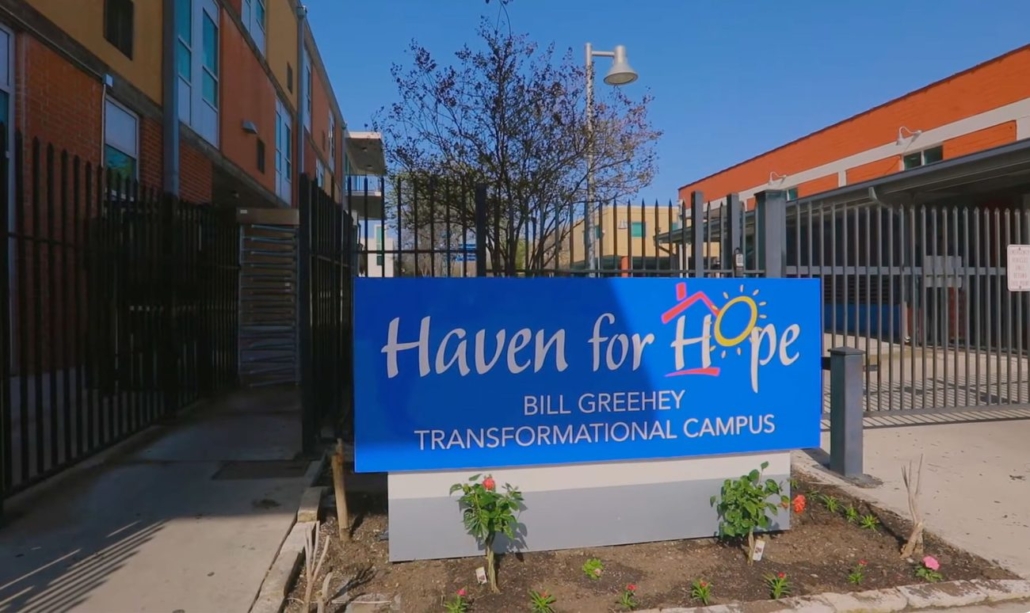
We visited San Antonio’s Haven for Hope and Austin’s Community First Village to study large-scale models that address homelessness through housing, care, health services and workforce training. These campuses demonstrated that integrating services in one place improves outcomes for homeless residents and taxpayers alike.
More importantly, we met with the cross-sector leadership behind these efforts—policymakers, housing and social services experts, first responders, corporate executives, philanthropists and civic officials. Their message was clear: Success is only possible through regional collaboration and systems-level integration.
In 2024, California reported 47 homeless individuals for every 10,000 residents, while Texas reported nine—an 81% differential. And Texas spent only $806 per unhoused person—93% less than California’s
$11,000.
Texas also outperforms on housing affordability. The median home price in Texas is $339,330, well below the national median of $410,000 and a third of California’s staggering $900,000. Renters in California pay nearly double what they would in Texas.
California is one of the wealthiest and most innovative regions in the world. We are home to leading experts across every field and embody a spirit of collaboration and hope. It’s my hope that this learning trip reflects a turning point for California to get it right and lead the adoption of models that work.
San Antonio’s Haven for Hope’s one-stop campus model has reduced unsheltered homelessness downtown by more than 75%. Across its 22-acre campus, more than 80 nonprofits and government agencies serve 1,500 clients with housing, health, wellness and recovery services. An economic analysis found that for every $1 invested, the community received approximately $29 in systems savings and downstream economic benefits.
On 51 acres, Community First Village offers permanent housing, health and wellness services and a built-in support network for individuals emerging from chronic homelessness. Residents had lived on the streets for an average of eight years before moving into one of the fully furnished tiny homes.
These campuses met a diversity of needs—interim housing, permanent housing, low-barrier shelter and drug-free settings for addicts in recovery—that have few equivalents in California.
Could the Bay Area adopt a similar approach? We must consider it.
Despite historic investments, homelessness in California is five times more common than in Texas because our response is incomplete and fragmented and because our housing shortage persists. In contrast, Texas leaders worked together on legislation, funding, enforcement and program delivery to make these campuses possible—and on building an abundant housing supply to reduce future need for these services.
Collaboration applies to housing policy as well. In Austin, we engaged with leaders who helped drive a housing boom and a 22% decrease in rent prices since 2022 through incentives and zoning reforms.
The lesson from Texas is clear: Transformational progress requires alignment. Scaled impact is only possible through regional collaboration—business, civic, philanthropic and community leaders operating with shared vision, shared accountability and shared outcomes.
This is our moment. When we collaborate, lead with empathy and leverage our collective strengths, the Bay Area can pioneer scalable, human-centered solutions that transform lives—and set a new global standard for what is possible.