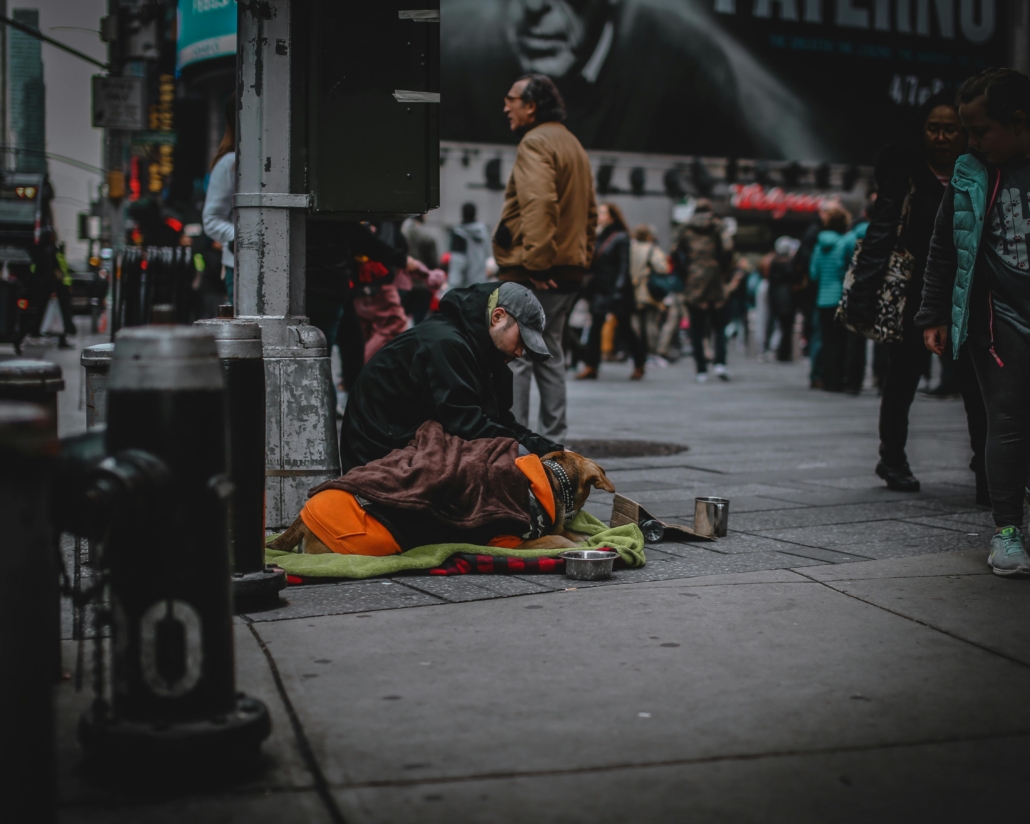
We Can Reclaim Our Streets Without Criminalizing Homelessness
In October, my organization led a delegation of 60 California public and private sector leaders — including the heads of homelessness for San Francisco, San Jose and Oakland — to San Antonio, Texas.
We went there to learn from its example in singularly reversing what had been a growing homelessness crisis — achieving an 80 percent decline in unsheltered downtown homelessness.
The proximate cause for this dramatic decline was the creation of Haven for Hope, a 22-acre campus adjacent to downtown that offers a complete array of services meeting virtually every conceivable need, all on one site, for those experiencing homelessness or at risk of doing so.
But delving deeper, it became apparent that the campus is simply the nexus for a larger community intervention. The campus provided the impetus for developing a system of care across the community, bringing together all of those oft-forgotten sectors that deal with the homeless, to coordinate the entire city around the issue of homelessness.
Importantly, this includes law enforcement, whose standard role is often relegated to activities that criminalize homelessness: clearing encampments, citing individuals for vagrancy and related activities.
In San Antonio, our delegation also met with the chief of police, who likened criminalizing homelessness to “chasing your tail and never catching it.” Yet the San Antonio Police Department is an important and integrated piece of San Antonio’s homelessness response system.
Like police departments across the country, San Antonio’s used to issue countless citations for sitting or lying down on a sidewalk, urinating in public, camping in public or “aggressively” soliciting for money. Tickets and fines piled up, all while the city was fully aware that there was not enough shelter or other resources available to provide alternatives to such behaviors.
With the Haven campus now established, the police are integrated alongside other sectors. San Antonio police supplement Haven’s outreach team with its own Homeless Outreach Positive Encounters Team, which provides outreach, navigation to the Haven for Hope campus and ID recovery.
The department also includes a Community Outreach and Resiliency Effort team, dispatching a San Antonio Police Department officer, a San Antonio Fire Department paramedic and a Center for Health Care Services mental health clinician to respond to mental health 911 calls across San Antonio.
Many of these developments resulted directly from individual police officers sharing their experience at Haven with the department at large. The Haven for Hope campus includes intensive security, ensuring the safety of those in its care, and the surrounding community.
Many San Antonio Police officers moonlight at Haven, and I had the chance to speak with two of them. When I asked what they had learned working at Haven, they responded, in unison: “Compassion.” In getting to know Haven’s residents, they had learned firsthand the issues with which many of those experiencing homelessness are dealing, including substance use disorder and mental illness.
As they put it, now when they’re on patrol in the wider community and come across someone in crisis, they can “tell when they’re having a bad day.” And “whether it’s off meds,” or “a manic day,” officers “know to talk to them now to try to bring them down” and “don’t just throw handcuffs on them [and] throw them in jail.”
“We learned that by working here with the people,” one of them concluded.
Our Bay Area delegation welcomed the San Antonio police chief’s pronouncement that “homelessness is not something police can solve,” and left our visit challenged to adapt their campus model to our communities.
By providing the full array of housing, programs and services that fully meets the needs of our unhoused neighbors, and bringing all of our sectors to work together, strategically, we can make the tragedy of street homelessness a thing of the past, with compassion, not coercion.